what to do with fido identifying elements of a plot
Knowing the parts of a story are essential for getting your book right.
Without constructing your book with these in heed, you could exist taking the volume thought you lot actually love and demand to get out into the earth and but throwing information technology abroad.
And that'south not to mention whether or not you're setting yourself up for success when you publish…
Just if you actually desire readers to not just experience your story just to enjoy information technology, keeping these parts of a story top of mind is crucial.
These are the dissimilar parts of a story:
- Characters
- Setting
- Plot
- Conflict
- Resolution
- Themes
- Morals
- Symbolism
- Point of view
- Perspective
- Catastrophe
What are the parts of a story?
The main parts of a story consist of five elements: characters, setting, plot, conflict, and resolution. Great authors know how to harness these story elements with others nosotros'll comprehend in this mail service to write a memorable story.
There are infinite ways to write a volume and tell a story.
You can use endlessly unlike story structures and styles, just each story or novel is going to boil down to three primal elements: character, setting, and plot.
For the purposes of giving yous all the tools you need to write a book worth buying, nosotros're going a tad deeper than the master 5 story elements, because we know the greats—authors like Stephen King and George R.R. Martin—use more than that.
Those v elements are your story's main course, but what's a meal without side dishes?
In addition to the principal v to a higher place, we're as well going to cover more than parts of a story, including themes, morals, symbolism, point of view, and perspective.
What they are, how to use them, and how all of these literary elements work together to make a complete and filling dinner–I mean story…I'thou hungry.
Parts of a Story Great Authors Use to Write Memorable, Binge-Worthy Stories & Novels
Once you've got a solid story idea, the real work begins.
Here are the 10 essential parts of a story every writer needs to get information technology correct. Without these, your story (whether y'all're writing a short story or a full novel) volition fall flat.
#1 – Characters
Your audience should feel different levels of closeness to your dissimilar characters, depending on if they're principal, secondary, or background characters.
But one central thing to keep in heed about including characters is, if your character is of import plenty to have a name, they're important plenty to have a goal.
What do your characters want? Their desire tin can exist elementary or complex, tangible or concept–maybe they want a chore, a house, approval, a kid, contentment. If your character doesn't want something, they won't exist compelled to human action.
If your graphic symbol isn't acting, they're passive or they're only a plot device. You want to avert both, and this is usually accomplished through stiff grapheme development.
Here are a few tips for writing astonishing characters in your story:
- Read our dedicated post about character development
- Highlight each character'south motivation
- Give them a backstory so they feel real
- Recollect to give each core character an arc
- Allow characers to make mistakes (never take a "perfect" character
Read these books to learn how characters tin become a strong office of your story:
- Middlegame past Seanan McGuire
- Skullsworn by Brian Staveley
- Game of Thrones by George R.R. Martin
#2 – Setting
The setting is when and where your story takes place.
Aside from the physical location and position in time, your setting can include:
- weather
- political climate
- social norms
- cultural influences
Take the time to consider these aspects to build a complex world for your characters to interact with.
Particularly in fantasy and sci-fi worlds, a lot of planning goes into establishing a convincing and engaging story setting that can either add to your plot or take away from it.
#3 – Plot
Your plot is probably the virtually obvious part of a story. Information technology's the actual story–what happens, when, how, why, and what's the result?
There are a lot of different ways to construction your plot, simply in general, a plot arc has five main points:
- Set-up/exposition – The kickoff office of your story where you establish the world, the characters, the tone, and your writing style
- Rising action – The rising action is usually prompted by your inciting incident. Here, yous escalate tension and problems, explore your characters. This is the biggest chunk of your volume.
- Climax – This is the sort of "moment of truth." The culmination of everything–the highest indicate of tension. The point the plot has been leading up to.
- Falling action – What goes upwardly, must come downward. This is where you resolve any subplots and side stories.
- Resolution – Wrap upwards, shut loops, or open whatever other story loops to segue into a sequel.
Along with our three fundamental story elements, we tin can dive a little deeper and discuss conflict and resolution.
#four – Conflict
Your conflict should ascent throughout (peaking at the climax). The conflict is the office of your story where readers get bought-in. They want to see how the conflict unfolds and how it plays into the plot.
Here are some questions yous tin ask yourself (or your beta readers):
- Does the scene add to the overall plot?
- Does the scene accelerate internal or inter-character relationships?
- Does the scene add to a subplot?
- Does the scene answer or bring almost any plot-crucial questions?
The disharmonize could lend to the overall plot, a subplot, disharmonize between characters, or even a smaller conflict that is resolved inside that scene. For a story to exist interesting, there needs to be conflict.
Scenes that don't add to that are fluff.
STORY TIP: During the editing process, a skilful practice is to await at each scene and ask if there is conflict within information technology. If there isn't, be certain it's then crucial to the plot, otherwise information technology tin can probably be deleted.
#v – Resolution
I want to talk a fiddling more than about resolution, since information technology'south so important. How you finish your story is what will sit with readers the longest.
What's the culmination of all nosotros went through during the story?
What did the characters learn that led them to the decisions they ultimately made? By the end of your story, all of your conflicts should have a resolution.
In some cases, conflicts are intentionally left a flake open-ended without a solid resolution, but this should be washed intentionally and there should be some sort of resolution, even if it's an unsatisfying catastrophe with a little remaining mystery.
Further boiling a story downward will reveal elements like themes, morals, and symbolism, parts of a story that aren't merely near putting the writing together, only more about why yous're telling this specific story.
#6 – Themes
A theme is your story's main takeaway. Your story can have one theme, or several.
The theme of your story helps to focus the narrative and answers the question: What's the bespeak?
Some examples of themes include:
- Coming of age–what struggles come with it, what's good nearly information technology
- Forgiveness–trying to achieve it, avoiding it, accepting it
- Death–overcoming it, processing it, fearing information technology
- Love–overcoming it, processing it, fearing it (lol)
- Empowerment
- Displacement
- Motherhood
- Injustice
- Good versus bad
The list is literally endless.
What take your characters learned? How are they changed, and what will they affect now that they are different?
#7 – Morals
The moral of your story is related to theme–what message practise y'all want your story to convey?
If the theme is what the grapheme learned, you can think of the moral every bit what the reader learned.
Let's have a coming-of-age narrative–what are possible morals in that blazon of story?
- Don't grow up too fast
- Follow your dreams
- Listen to the wisdom of others
- Accept yourself as you are
- Appreciate where you are and what's happening now
Consider what morals you lot want to convey, but avoid directly stating them when writing your book. This is part of the experience of reading your story…and that'south for the readers.
#viii – Symbolism
Symbolism is a literary device used to convey subtle meanings.
A symbol in your story can be annihilation from an object, a character archetype, an creature, an occurrence in nature to things like a window, an estranged father, a king of beasts, a tempest, a desk, a fire.
Symbols accept meaning connected to them that can be universal, or they tin can be fabricated-up symbolism for your unique earth and story.
Here are some examples of symbolism in stories:
- A window might signify liberty, longing, promise.
- A lion might be bravery.
- A storm might be impending doom or threat.
- A desk could indicate creativity, piece of work, fail.
Information technology all depends on the context of the story and the connotations you lot assign to your symbols.
Themes, morals, and symbolism are fun writing tools and parts of a story to work with, just be cautious of relying on them.
They're icing and sprinkles–not the cupcake.
#9 – Point of view
The indicate of view of your story is just who is telling the story. The nigh common in fiction are first-person, 3rd-person limited, and third-person omniscient.
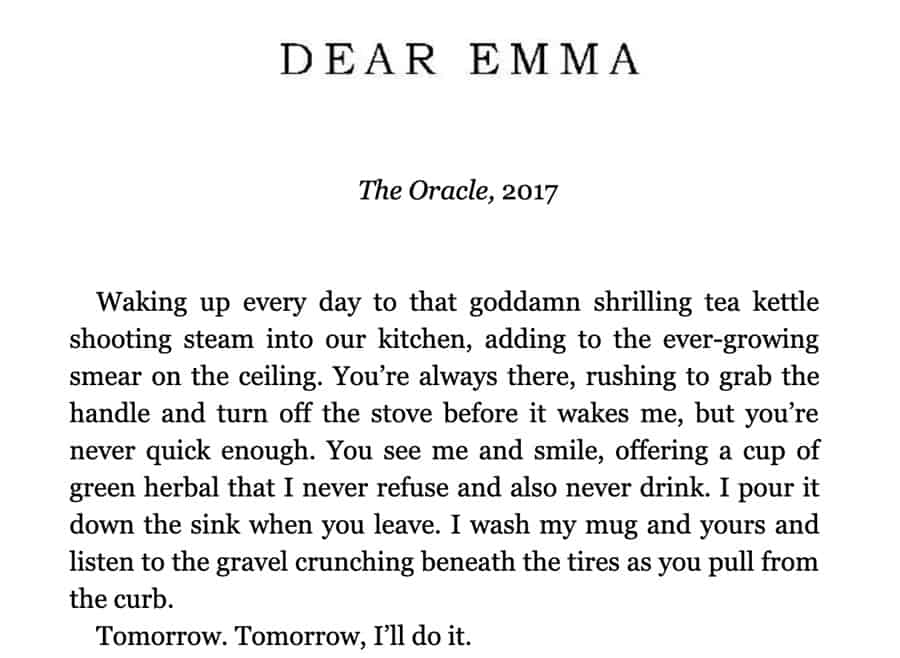
Offset-person POV:
Showtime-person signal of view (POV) is the main character telling the story. Information technology uses the pronouns I, me, myself.
A force of using starting time-person is that your reader will connect with your character very easily–the reader essentially becomes the character. If done well, this is a very intimate reading experience.
A weakness of first-person is that your storytelling is limited to that perspective. It's difficult to tell an entire story with a single, first-person narrator. Information technology tin can be done, but information technology takes more try than information technology might with a different indicate of view.
Here's a starting time-person indicate of view example from my collection of short stories, Petty Birds.
Third-person limited POV:
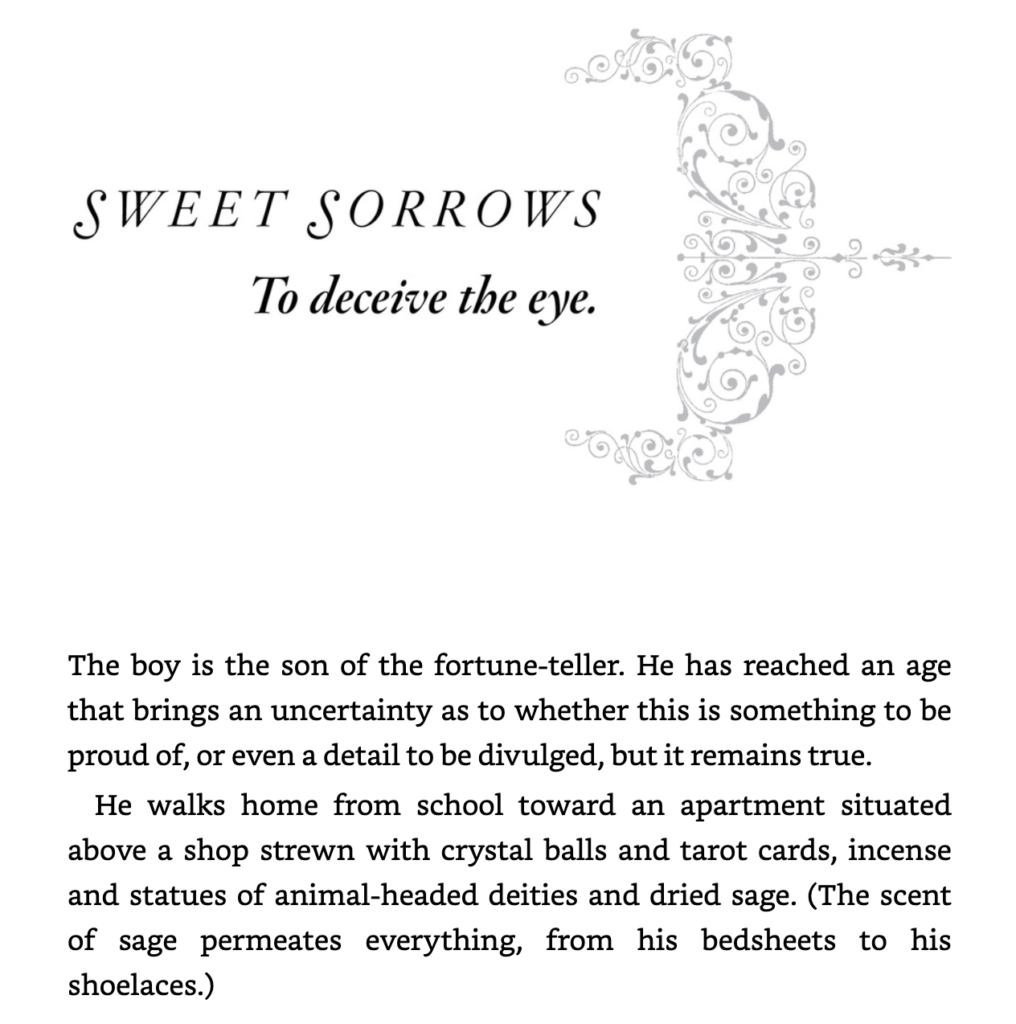
Third-person is an outside narrator telling the story. It uses the pronouns he, she, they.
Fifty-fifty though it'southward an outsider narrator, third express keeps us in the point of view of our character(s)–the reader just knows what the character knows.
A forcefulness of 3rd-person point of view is the versatility. It's much easier to accept multiple point of view characters with third-person, as opposed to commencement. You can also period between third express and third omniscient in a novel.
The weakness is you don't get the closeness to the graphic symbol you lot have in first-person, though this can still exist created through stiff character development and using the rule of show, don't tell.
Hither's an example of tertiary person limited point of view from Erin Morgenstern'due south The Starless Sea.
Third-person omniscient POV:
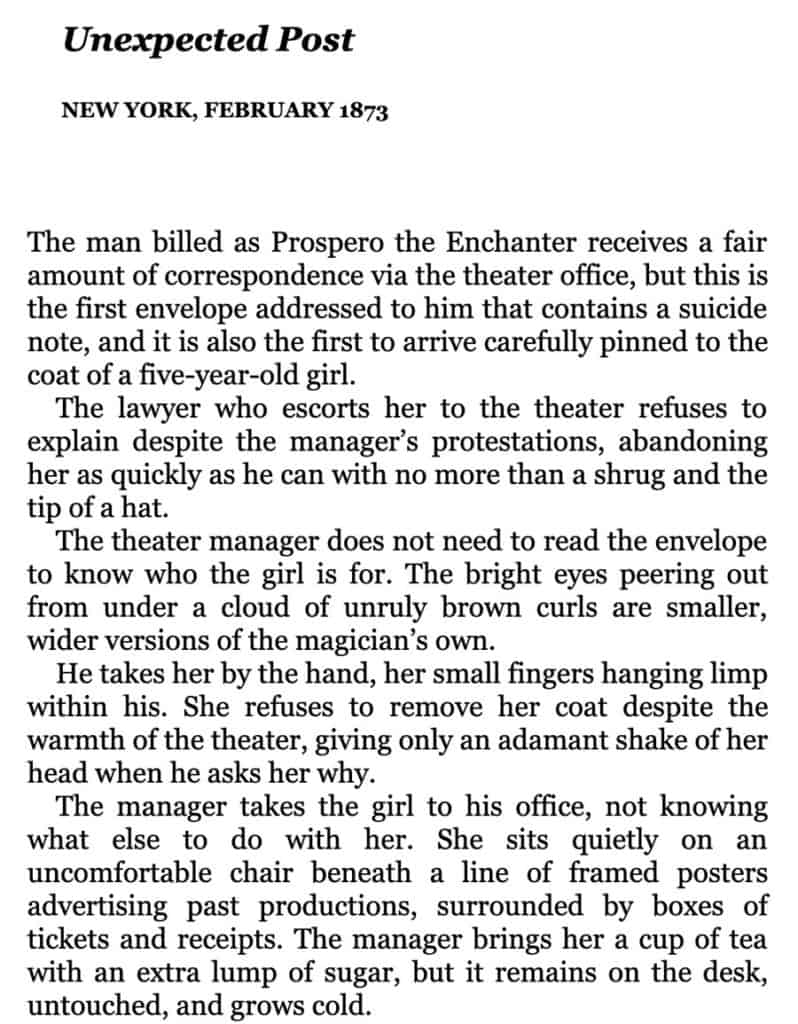
Third omniscient is when an exterior, all-knowing narrator tells the story. Third omniscient can jump into any character's thoughts and knows things about the story the characters might not know.
The omniscient narrator knows everything happening in the universe.
The obvious forcefulness of tertiary omniscient is ease of storytelling–yous're not limited to whatsoever one graphic symbol's noesis.
The weakness is you're fifty-fifty further from your character and it's that much harder to forge a connection between your characters and your readers.
Author Erin Morgenstern does a dandy job with this point of view in her novel The Night Circus, seen below.
# 10 – Perspective
Even though "signal of view" and "perspective" are often used in the writing community interchangeably, perspective is really dissimilar.
Perspective in your story refers to the character'southward estimation of the world and their attitude toward it.
A character'south perspective can be determined by their personal story–their upbringing, their opinions, their socioeconomic status, their education level, etc.
Considering your character'due south worldview when deciding their morals and actions will make your characters and story feel more accurate.
While you outline your book and story's plot, characters, and setting, don't forget to consider everything else we've covered.
These elements piece of work together to tell a consummate and engaging story.
Ready To Write and Publish YOUR Book?
Get the #ane Bestselling book on Amazon that teaches you footstep-past-pace, affiliate by chapter, how to write your get-go, or 5th, volume using our easy-to-follow procedure!

Disclosure: Some of the links above may contain affiliate partnerships, meaning, at no additional cost to you, Cocky-Publishing School may earn a commission if you click through to brand a purchase.
Source: https://self-publishingschool.com/parts-of-a-story/
0 Response to "what to do with fido identifying elements of a plot"
Post a Comment